Introduction

The internal combustion process in a car necessitates precise coordination between several engine components to function properly in its intricate sequence of events. Every part, including the injection pump, is vital in attaining the appropriate functionality and performance.

Diesel engines require an injection pump to calculate and pressurise fuel and feed it to each cylinder at the proper time. The pump’s capacity to precisely and promptly provide an air-fuel mixture into the chamber is critical to combustion. Because of this, even a minor flaw in the pump might disrupt the combustion process, resulting in poor performance.

Types of Fuel Injection Pumps

Over the years, several different systems have been developed to control and efficiently perform the fuel injection process. Although many variations exist, these can be broadly categorised into mechanical and electronic techniques. However, the common rail fuel injection pump has recently gained popularity among manufacturers.

Mechanical Fuel Injection Pump

Cars with mechanical injection systems use a mechanical pump to supply fuel directly into the combustion chamber via the injector nozzles. This type of injection pump is primarily found in heavy-duty applications such as trucks, buses, and agricultural equipment.

Mechanical fuel injection systems, in contrast to common rail systems, rely on the movement of the engine pistons to generate precise ignition timing rather than electronically controlled valves. Although this increases power production and fuel economy, the increased component wear may lead to higher maintenance expenses.

Electronic Fuel Injection Pump

The Electronic Fuel Injection (EFI) system consists of two primary compartments: Low-Pressure and High-Pressure. The Low-Pressure part of the EFI consists of the fuel tank, fuel pump, heater, and cooler, whereas the High-Pressure component comprises the fuel injector, the nozzle, the high-pressure pump, and the fuel accumulator.

High demands for lower engine emissions and better, more flexible performance were a major impetus for the introduction of electronically controlled fuel injection systems in the late 1980s and 1990s.

Common Rail Fuel Injection Pump

The ‘rail’, a centralised high-pressure fuel pump, is used by common rail diesel engines to supply pressurised fuel to the injectors. The injectors in the common rail injection system are electronically controlled valves. In response to inputs from an engine management system, the injectors inject precise amounts of fuel into each cylinder.

A common rail injection system allows multiple injections during every combustion cycle, providing finer control of fuel delivery and thus enhancing engine performance. This makes them the preferred choice for today’s diesel engines, as they cover a broad range of operating conditions while achieving stringent environmental regulations and maximum engine performance.

Additionally, these systems include piezo components or solenoid valves, which open and close rapidly to promote improved combustion and effective ignition timing. Compared to mechanical injection systems, common rail systems produce less noise, which makes them perfect for utility (UTE) and passenger automobiles.

Function of Fuel Injection Pump

The fuel injection pump, comprising sensors and control units, plays a major role in the workings of the fuel injection system. These accompanying parts help to regulate the fuel pressure, the timing of the injection, and the duration of the fuel delivery.

Fuel Metering

The fuel metering system in an internal combustion engine makes use of an electronic computer to calculate the intended fuel flow required to maintain an air/fuel ratio. This desired fuel flow is achieved through a basic metering system that takes into account the transfer of fuel from the liquid state, on the wall surface of the intake passages of the engine, to the vapour/gas state in the inducted fuel-air mixture.

Timing and Injection

Injection timing, also known as spill timing, is when the fuel enters the cylinder in the engine during internal combustion. An injection pump is often indirectly driven from the crankshaft by chains, gears, or timing belts. It is also responsible for moving the camshaft. The timing of the pump determines at which point it’ll inject fuel into the cylinder once the piston reaches the BTDC point. Hence, we can infer from this that one can control when combustion will occur by adjusting the fuel injection timing in the engine.

Manufactured diesel engines have a specified injection timing that is recommended per the make and model of your engine. However, one can alter it to receive as much power as possible without breaking legal emission limits.

Fuel Pressure Regulation

The fuel pressure regulator is a crucial component of the electronic fuelled injection system, in its absence the fuel rail will not be able to produce the required pressure necessary to produce a sufficient amount of fuel to support the injectors instead the fuel will drain out and not reach the injectors.

The fuel pressure regulator is composed of two chambers. Out of these two, one of the chambers is subjected to pressure from the fuel rail while the other chamber is subjected to vacuum from the inlet tract.

FAQ’s

  • How does a mechanical fuel injection pump differ from an electronic fuel injection pump?

The primary difference between an electric pump and a mechanical fuel pump is that mechanical pumps make use of a moving mechanical pump to transfer the fuel from the tank and into the engine, whereas electrical pumps use electricity and digitally powered pump to move fuel from the tank to the engine.

  • What advantages does a common rail fuel injection pump offer over other types?

Common rail diesel engines offer a greater advantage over other forms of injection pumps. These pumps consume less fuel, are highly reliable, long-lasting, and have a high torque. Diesel engines with common rail pumps emit much less harmful gasesgasses than engines without common rail pumps, so they are also environmentally friendly compared to gasoline engines.

  • What is the primary function of a fuel injection pump in a vehicle’s engine?

The fuel injection pump is one of the most critical and integral components in the fuel injection system. It helps increase the pressure of your engine to produce sufficient fuel at regular intervals in the fuel chamber.

  • How does a fuel injection pump regulate fuel metering to the engine?

In a mechanical system, the fuel charge is precisely metered and pressured by the fuel injection pump before being routed through pipes to the high-pressure injectors in the combustion chamber, where it burns. The resulting combustion gases then move the piston downward. 

Conclusion

To summarise, there are certain components that are crucial in the process of internal combustion, among which are fuel pumps. Whether you drive a diesel truck or gasoline-powered car, the fuel pump plays a vital role in transferring the fuel from the tank to the engine of your vehicle.  This blog has taken you through the three major types of injection pumps. The electronic pump or the modern workhouse is a standard choice for modern vehicles due to its efficiency and reliability. The traditional Mechanical pumps, though not so popular today, are still used in cases of heavy machinery and vintage cars and finally, the new-age technologically advanced high-pressure injection pumps, have recently gained major prominence.

Introduction

In automotive engineering, the design and assembly of an engine involve distinct stages that culminate in the production of a fully functional engine. Two primary stages in this process are the creation of long-block and short-block engines. Every one of them helps with the final setup of an engine. Understanding the difference between long-block and short-block engines is crucial for better comprehension of engine design.

What is a Long Block Engine?

A long block indicates a car engine type that represents an intermediary step in the engine’s assembly process. It contains a more extensive set of internal parts compared to short blocks. Commonly, a long block has within it the main body called an engine block along with cylinder head(s), camshaft(s), valves, and springs; these are crucial elements for combustion and power generation. However, a long block does not incorporate external components such as the intake manifold, exhaust manifold, fuel system components, or other accessories required for full engine operation.

The assembly of long block engines provides a foundational platform with key internal components necessary for engine functionality. This configuration offers versatility and adaptability, allowing for customisation to meet specific vehicle applications. Manufacturers can integrate additional components based on performance requirements and design specifications, making long blocks ideal for optimising engine performance and versatility.

What is a Short Block Engine?

On the other hand, short block engines are a basic part of an engine that has crucial core elements forming the structural base. Normally, it includes the engine block, crankshaft, connecting rods, pistons, and bearings. Parts that are not present could be things like cylinder heads or valvetrain mechanisms; these are items needed for the full operation of a motor but might not always come with it when purchased separately.

The primary function of a short block is to establish the engine’s structural integrity and internal mechanisms necessary for combustion. This configuration facilitates efficient assembly and customisation, integrating various cylinder heads and external components based on specific performance and application requirements.

Differences Between Short Block and Long Block Engines

The primary differences between short block and long-block engines lie in their completeness and complexity:

Completeness

Short block engines are less complete than long block engines, lacking critical components such as cylinder heads and associated valvetrain mechanisms.

Long block engines are more comprehensive, including cylinder heads, valvetrain components, and other internal systems necessary for combustion and operation.

Complexity

Long block engines are more complex and versatile due to the inclusion of additional components, providing greater customisation and adaptability for specific performance requirements.

Short block engines are simpler and more focused on the engine’s core structure, suitable for basic assembly and integration into various vehicle platforms.

Assembly and Customization:

Short block engines offer a more streamlined assembly process, focusing on core components and allowing for easier customisation with various cylinder heads and external accessories.

Long block engines require additional assembly steps and integration of complex internal systems, providing a comprehensive foundation for advanced engine configurations.


What is a Short block vs Long Block

AspectLong Block EngineShort Block Engine
Components IncludedEngine block, cylinder head(s), camshaft(s), valves, springs, internal systemsEngine block, crankshaft, pistons, connecting rods, bearings
CompletenessMore comprehensive includes critical internal components and valvetrainBasic structure with core internal components, lacks cylinder heads and external accessories
CustomizationOffers flexibility for customization based on performance requirementsLimited customization due to the basic component set
CostMore expensive due to the inclusion of additional componentsGenerally more cost-effective with fewer components
Performance PotentialCapable of supporting higher horsepower and torquePerformance may be limited without complete valvetrain and accessories
ComplexityMore complex assembly and integration of internal systemsSimplified assembly and integration, easier to maintain

Pros and Cons of Short Block Engines

Short block engines, characterised by their foundational structure and core components, offer specific advantages and disadvantages in automotive engineering. Understanding these attributes is crucial for evaluating their suitability in various applications.

Pros of Short Block Engines

Let’s take a look at the pros.

  • Simplified Assembly

Short block engines facilitate a streamlined assembly process due to their basic structure, comprising essential components like the engine block, crankshaft, pistons, and connecting rods. This simplicity reduces manufacturing complexity and assembly time.

  • Customisation Flexibility

Short blocks provide flexibility for customization based on specific performance requirements. In the automotive industry, various cylinder heads and camshafts can be combined with other external parts. This allows for customisation of the engine’s features to suit different uses.

  • Cost-Effective

Compared to long block engines, short block configurations are generally more cost-effective. Short block engines have fewer components to handle, making them simpler for maintenance and fixing. This lessens the complexity of regular upkeep jobs and decreases the time when vehicle owners as well as service technicians are without their vehicles. They require fewer components and resources for assembly, making them an economical choice for engine production.

  • Ease of Maintenance:

With fewer components to manage, short-block engines are easier to maintain and repair. This simplifies routine maintenance tasks and reduces downtime, benefiting both vehicle owners and service technicians.

Cons of Short Block Engines

Now, we must evaluate the cons.

  • Limited Features

Short block engines lack critical components like cylinder heads, valvetrain mechanisms, and external accessories necessary for complete engine operation. This limitation restricts their performance potential compared to long-block engines.

  • Complex Integration

Integrating additional components onto a short block can be complex and time-consuming. Achieving optimal compatibility and functionality with external accessories requires meticulous engineering and assembly.

  • Reduced Performance Options

The inherent simplicity of short-block engines may limit the range of performance options available. Advanced features and technologies typically associated with long block configurations may not be fully compatible or achievable.

Pros and Cons of Long Block Engines

Long block engines represent a more comprehensive and integrated stage of engine assembly, offering distinct advantages and challenges in automotive applications.

Pros of Long Block Engines

Starting with the pros again.

  • Complete Integration

Long block engines come equipped with critical components like cylinder heads, valvetrain mechanisms, camshafts, and other accessories necessary for full engine operation. This completeness simplifies installation and ensures optimal performance.

  • Enhanced Performance Potential

With advanced internal components and integrated systems, long block engines offer superior performance capabilities compared to short block configurations. They are capable of supporting higher horsepower, torque, and efficiency.

  • Ready for Installation

Long block engines are essentially “drop-in” units ready for installation into vehicles. This simplifies the manufacturing and assembly process, reducing labor costs and assembly time.

Cons of Long Block Engines

Let’s review the cons next.

  • Higher Cost

The comprehensive nature of long-block engines contributes to higher production costs compared to short-block configurations. The inclusion of additional components and systems increases manufacturing expenses.

  • Complex Maintenance and Repair

Long block engines, with their integrated systems and components, can be more challenging to maintain and repair. Accessing and servicing internal components may require specialised tools and expertise.

  • Limited Customization

Long block engines may offer less flexibility for customisation compared to short block configurations. Modifying specific components or characteristics may be more complex and restrictive.

FAQ’s

1. What are the main components of a short-block engine?

A short block engine is a basic type of engine that has the necessary parts to make up the main structure. This includes the motor block, crankshaft, pistons, connecting rods, and bearings for them. The engine block contains cylinders and acts as a base for full assembly.

2. What additional components are found in a long-block engine compared to a short block?

A long block engine includes all the parts of a short block, but it also has more components. These additional elements are typically the cylinder head(s), camshaft(s), valvetrain, and sometimes the oil pump and pan as well. The term “long block” signifies that these components are present in an engine assembly.

3. How do the design differences between short-block and long-block engines affect performance?

The design differences of short block and long-block engines have a big effect on the results of performance. Engines that are long block, having complete valvetrain and all-in-one systems show better horsepower, torque as well as efficiency compared to short block setups. Adding a complete valvetrain will help accurately control the intake and exhaust processes, making combustion more effective and increasing power production.

4. What are the advantages of opting for a short block engine over a long block, and vice versa?

Deciding on a short-block or long-block engine relies on the application’s particular requirements and performance goals. Short block engines are favoured because they are cost-effective, offer more straightforward assembly, and allow for easier customisation according to specific needs. These engines are perfect for basic applications where performance demands are not too high, and one wants flexibility in customisation options. On the other hand, long block engines give complete integration, better performance possibilities, and simple installation.

          Conclusion

          To sum up, there are special benefits and drawbacks for both short block engines and long block engines that influence their suitability in different cars. Choosing one of these setups depends on the specific requirements of a project, desired results in performance, as well as financial limitations within automotive engineering.

          Introduction

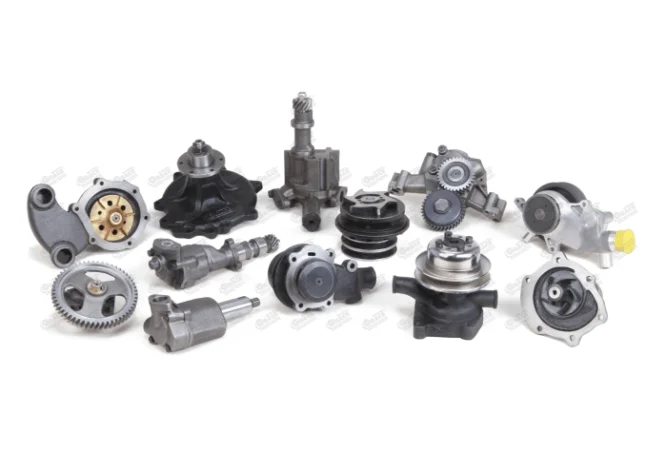
          The car engine oil pump is a critical subsystem that plays a pivotal role in maintaining optimal engine performance. It functions by circulating engine oil under pressure to the rotating bearings, the sliding pistons, and the camshaft of the engine. This lubrication prevents friction-induced wear, enabling smooth operation and longevity of the engine components. 

          It is essential to understand what it is and how it functions. We at Garima Global have put up this useful article to help you understand everything about car engine oil pumps. Enjoy reading!

          What is a Car Engine Oil Pump?

          A car engine oil pump is a component of your car engine that is in charge of lubricating the engine’s various parts like the camshaft, the bearings and the piston, and transporting oil throughout the engine. It is usually found inside the engine, either outside the oil pan, where it is driven by the crankshaft, or inside the pan where it is driven by the camshaft.

          Before the oil reaches the pump, it is pulled out of the pan and passes through a filter, where the oil is purified of any contaminants. This fluid then flows through the engine’s channels by applying pressure.

          The oil pump is an integral component of an engine  that is essential for your car’s engine to perform properly and last a long time.

          Types & Varieties of Car Engine Oil Pumps

          Gear Oil Pump

          Gear oil pumps are one of the most easily available pumps in the market. It consists of two interconnected gears that help to draw out the oil from the pump’s suction side and then push it out at a much higher pressure through the discharge gear by rotating. Gear oil pumps are known for their simple design and reliability

          Rotor Oil Pump

          A rotor oil pump uses an inner and an outer rotor. The lobes of the rotor pump rotate to pull the oil through the inlet and push it through the outlet under pressure

          Vane Oil Pump

          A vane oil pump is a kind of a rotating pump which consists of paddle-like vanes placed radially on a cylinder rotor. The oil gets trapped in these compartments and is transported through the system.

          Crescent Oil Pump

          Crescent oil pumps are located on the control end of the crankshaft and are driven directly by it. These pumps therefore run at the same speed as the crankshaft which enables them to produce a much higher pressure and a higher delivery rate compared to a gear oil pump.

          Trochoid Oil Pump

          Trochoid oil pump is a kind of an internal gear oil pump which consists of inner and outer gear, located within the pump casting. When the inner gear runs, it also forces the outer gear to rotate in the same direction and the oil is produced under pressure. 

          Functions of Car Engine Oil Pumps

          The various functions of an oil pump are as follows:

          • Lubrication

          The main purpose of a car engine oil pump is to supply engine oil to its various moving compartments. Lubrication helps to prevent direct metal-to-metal contact in turn reducing friction and wear and tear of the engine components.

          • Cooling

          The circulation of the engine oil helps to absorb the heat generated by the friction of the moving parts. This oil further takes away the heat from the other components, thus regulating the overall temperature during engine operation and also prevents overheating.

          • Reduction of Friction

          Through the creation of a thin oil film between moving parts, the oil pump helps to lower friction. It reduces  wear and tear of the engine’s parts, enhances longevity and helps to maintain efficiency.

          • Noise Reduction

          Lubrication provided by the oil pump helps to reduce the noise generated by moving parts of the engine. The components which are adequately lubricated generally produce less noise due to reduced friction.

          • Protection against corrosion

          The engine oil consists of certain elements that protects the metal surfaces from corrosion and oxidation, thus preventing rust and deterioration of the engine components.

          • Prevention of oil leakage

          The engine block which is sealed to the oil pan using a gasket helps to prevent oil leakage

          Importance of Engine Oil Pumps

          The main purpose of a car engine oil pump is to supply oil under pressure to the various parts of an internal combustion engine, like the motor parts, which includes the camshaft, the bearings and the piston. The oil helps in lubricating these vital components, and therefore avoids the friction between the moving parts, and the motor from seizing. It also helps to maintain the optimal working conditions for an internal combustion engine by pumping oil to the various parts.

          FAQ’s

          • How does a gear oil pump operate, and where is it commonly used?

          Gear pumps consist of two gears- the input and output gear.The input gear rotates and creates a vacuum that draws fluid into the pump while the fluid is trapped between the gear teeth and is forced out through the outlet port.

          • What are the advantages of using a rotor oil pump in an engine?

          A rotor oil pump helps to extend the longevity of the engine and is able to pump against high pressure, contributing to the overall durability and reliability of your car.

          • How does a vane oil pump function, and what are its benefits?

          The vanes of a vane oil pump helps to enclose the walls of the pumping chamber with a seal which prevents the leakage back into the pump.

          • What distinguishes a crescent oil pump from other types of oil pumps?

          A crescent oil  pump is driven directly by the crankshaft at the same speed, and thus it produces a much higher pressure and faster delivery rate compared to the other pump types.

          Conclusion

          Engine oil pumps are an integral part of your engine. Not only does it help to pump oil to the various components of your car engine to run it smoothly, the oil helps in lubricating the surface which reduces friction between the parts thus protecting your car parts from damage and prolonging it’s life.

          Introduction

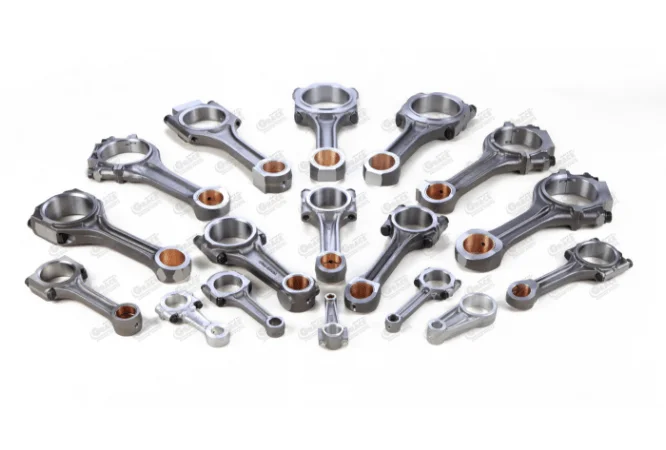
          Every part of the internal combustion engine has its role to play in the smooth running of the power unit and efficiency. A good instance is a connecting rod. This component is of great significance for the engine’s functioning because it connects a piston with the crankshaft, thereby making possible transformation of linear motion into a rotating one. This detailed blog will dwell on the connecting rod’s design, purpose, types, materials and servicing.

          These metallic structures are thin and hollow and play a crucial role in internal combustion engines. The liner is installed so that the moving piston comes into total contact with its perfectly polished bore,  and the liner is in complete contact with the cylinder block.

          Anatomy of a Connecting Rod

          The connecting rod is one of the very vital parts in internal combustion engines, which plays a significant role in joining the piston to the crankshaft. It consists of some key components such as the big end, small end, shank, and shoulders. The big end is connected to the crankshaft by use of a bearing while the small end houses the piston pin that facilitates back and forth motion of the piston. Shank serves as a major part that links both the ends – it ensures forces are transmitted from the small end to the big end.

          Besides, these, shoulders give support and stability to it under extreme mechanical stress without allowing distortion in its shape. This is why knowledge of how this component looks like in terms of its structure helps people understand better how it operates within an engine running on internal combustion principles; therefore, showing what importance it has towards the general purpose and operational capacity of an engine.

          Functionality of a Connecting Rod

          Above all, the pivotal function of a link rod is to shift the piston’s back-and-forth motion into the crankshaft’s rotational movement. The force of the piston in the cylinder is sent by the connecting rod to the crankshaft then turns it into rotation for propelling the vehicle along.

          In addition to being a linkage between motions, it also helps maintain structural integrity in an engine as well. So, comprehending how this component runs is necessary when considering what major role connecting rods play in the perfectly functioning of internal combustion engines.

          Types of Connecting Rods

          Connecting rods are available in different forms which are created to fit particular applications and meet performance requirements. I-beam, H-beam, and A-beam are some of them. The I-beam rods are lightweight and suitable for street use while the H-Beam design gives more strength and thus lasts longer, hence desirable for high-performance engines. A-Beam is generally used in diesel engines as they are robust and dependable too.

          Materials Used in Connecting Rod Construction

          Connecting rods are typically manufactured from high-strength materials; these include steel forgings, aluminum, titanium, or carbon fiber composites. The material decision relies on factors such as the type of engine to be used, application context, and performance demands.

          Where high-performance engines are concerned, it is not surprising that the best choice among all is usually forged steel rods mainly due to their durability as well as superior strength while aluminum rods are light in weight and hence ideal for racing applications.

          Titanium rods, which are an alternative with superior strength for engines needing top-notch performance, whereas technology advancement has brought carbon fiber composites as a viable option that combines weight reduction with strength. Material selection plays a critical role in the overall performance and life span of connecting rods, making it mandatory for engine builders and enthusiasts to carefully analyze their options based on specific requirements and objectives.

          Balancing and Tuning Connecting Rods

          There are two important aspects of balancing and tuning connecting rods in engine assembly, which are crucial for ensuring smoothness of operation and reduction in vibrations. Balancing is the process of equalizing the weight distribution of the connecting rods to prevent engine imbalance that can lead to premature wear and reduced performance.

          On the other hand, tuning aligns connecting rods’ length and stiffness with the specific requirements of an engine. These parameters can be set with great care to optimize conditions during combustion thus making it less straining on the entire frame. With these principles, balancing and turning become part and parcel of maximizing engine efficiency as well as longevity; hence a must-do during engine assembly.

          Performance Connecting Rods

          Performance rods are designed to withstand more loads and stresses compared to standard ones, making them a perfect fit for high-performance engines. These rods are typically of forged steel or titanium alloys, which leads to more rigid structures capable of withstanding higher horsepower and torque. In addition, the performance rods are designed with  different lengths and configurations to suit various engine setups.

          Maintenance and Care Tips

          Regular checking of bolts, nuts, and bearings of connecting rods will help in identifying early signs of wearing out or any damage. Moreover, following manufacturer guidelines about torque specifications along with lubrication that should be applied can prevent premature failure of connecting rods thus prolonging their durability. Also, ensuring correct oil levels in the engine at all times as well as timely changing engine oil can ensure that these parts do not wear out prematurely.

          FAQ’s

          • What is the primary role of a connecting rod in an engine?

          The connection rod’s primary function is to transform the piston’s back and forth (reciprocating) motion to the rotating motion of the crankshaft.

          • What are the main types of connecting rods and their applications?

          The main types of rods based on shank cross-section design are I-beam, H-beam, & A-beam rods. I-Beam Rods are lightweight and hence suitable for street applications while H-Beam Rods provide increased strength meant for high-performance engines. A-beam rods are usually used in diesel engines due to their ruggedness.

          • How does the material of a connecting rod impact engine performance?

          The material used for a connecting rod affects its strength, weight, and durability; hence its impact on the engine performance too. Materials like forged steel and titanium have superior strength and durability which makes them ideal for high-performance engines whereas aluminum rods are light (weight) for racing purposes.

          • What is the difference between fully floating and press-fit connecting rods?

          Fully floating connecting rods consist of separate bearings for the piston pin as well as the crankshaft journal so that they can move independently with minimal friction. On the other hand, press-fit connecting rods feature a piston pin that is pressed straight into the rod, thus making it stiffer.

          • What are the maintenance tips for ensuring the longevity of connecting rods?

          Examination of connecting rod bearings, bolts, and fasteners against torque specifications and lubrication recommendations while maintaining an adequate amount of engine oil is necessary for the long life and serviceability of connecting rods.

          Conclusion

          So, to conclude; the connecting rod is an essential part of internal combustion engines, both in terms of their functionality and durablility. We have discussed its anatomy, purpose, types, materials, and maintenance which indicate its importance in guaranteeing the best engine performance.

          Choose Garima Global for quality automotive components and accessories. Being a leading manufacturer and supplier in India, Garima Global offers a wide range of high-end spare parts as well as OEM components. By partnering with Garima Global, you can have access to products that are made of high-quality materials aimed at improving the performance and durability of your vehicles. This will, in turn, ensure high levels of satisfaction for your customer.

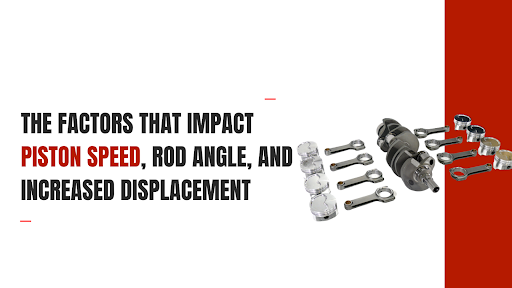
          Several things, like the pistons’ speed, the rods’ angle, and the engine’s size, affect how well it works. These parts are essential to how well the engine works as a whole, and they work closely with each other. The link between the piston and the connecting rod is vital because it directly affects the piston’s speed, the rod’s angle, and the engine’s size.

          Here are The Factors That Impact Piston Speed, Rod Angle, and Increased Displacement:

          • Piston Speed:

          The speed of the pistons is one of the most important things that affect how well the engine works. The speed at which the piston moves up and down in the cylinder is the piston speed. The more power the engine can make, the faster the piston moves. However, when you speed up the pistons, the high stresses and temperatures caused by the combustion process make the engine more likely to break.

          • Rod Angle:

          The angle of the rods is another important thing that affects how well the engine works. The rod angle at the top of the stroke is the angle between the piston connecting the rod and the piston. The stroke length can be made longer by making the rod angle steeper, making the engine’s displacement bigger. Nevertheless, because the connecting rod and piston are put under more stress, a steeper rod angle can also make it more likely that the engine will break.

          To find the best rod angle, engineers have to think about several things, like how much power they want the engine to have, how big the engine is, and how strong the connecting rod is. The rod angle must be carefully made to keep these things in balance and ensure the engine can make the power it needs without breaking down.

          • Increased displacement:

          The engine’s performance is also affected by how much bigger it is. Displacement is the size of the engine’s cylinders, which is a crucial factor in how much power the engine can put out. A bigger engine can make more power, but it also needs more gas and gives off more heat.

          To increase displacement, engineers have to think about many things, such as the size of the cylinders, the length of the piston’s stroke, and how well the combustion process works. However, increasing the displacement can also put more stress on parts of the engine, such as the piston connecting rod.

          Because of this, it is essential to ensure that the engine can handle these stresses and work well and safely.

          The Importance of the Piston Connecting Rod:

          To get the most out of an engine, it is essential to ensure these factors are balanced and that the piston’s connecting rod is designed and built correctly. The ideal piston connecting rod should be strong enough to handle the stresses caused by the combustion process while also being light and efficient. The connecting rod should also be designed in the best way possible to reduce the chance of engine failure and get the most power out of the engine.

          The pistons’ speed, the rods’ angle, and a more significant displacement are all critical parts of how well an engine works and are all closely related. To get the best performance out of an engine, the piston connecting rod’s design and engineering must consider all of these things. The engine’s power and efficiency can be increased by ensuring that these parts are balanced and that the piston’s connecting rod is well-designed and built.

          Cross Image

          Start the
          conversation.

          Every beautiful relationship starts with a simple hello. So let’s chat. It might just be the start of something memorable.